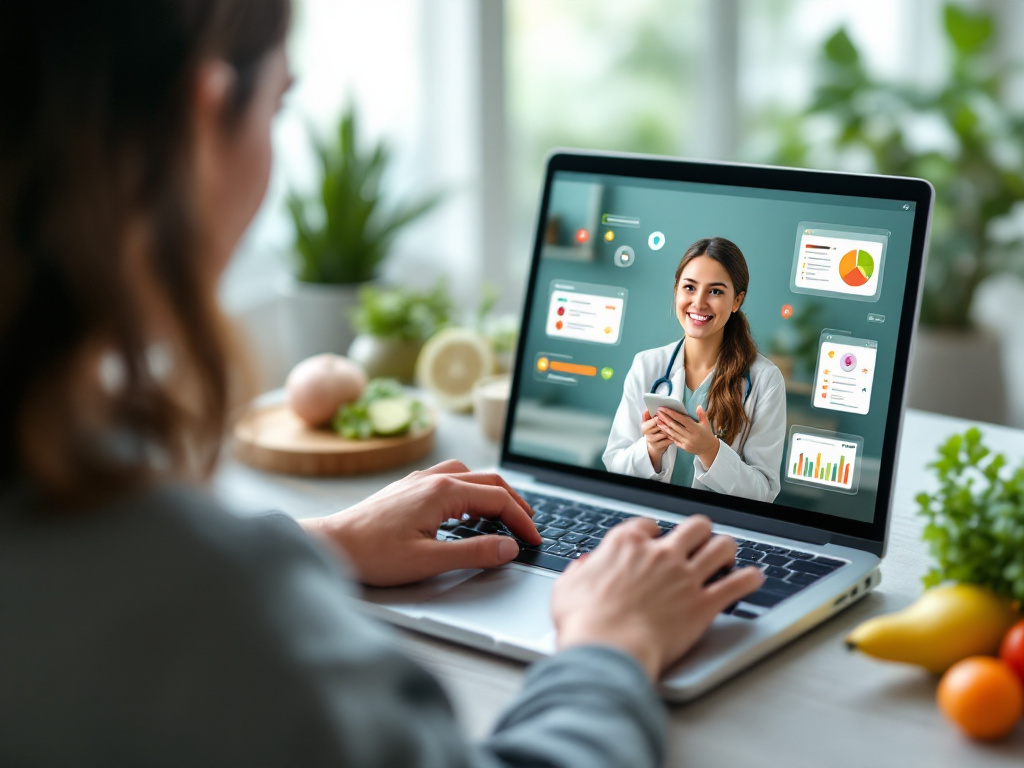
What a virtual nutrition consultation is
A virtual nutrition consultation is a one‑on‑one visit with a registered dietitian or medical provider that takes place online instead of in a clinic. You connect by secure video or phone, review your health history and goals, and walk away with a personalized nutrition and weight management plan.
Unlike generic diet apps or meal plans, a virtual nutrition consultation is built around your medical needs, lifestyle, and lab work. At many practices, your provider reviews your health history, current medications, and test results to design a tailored plan that can evolve as your body and schedule change over time [1].
When you combine this type of visit with a telehealth weight loss clinic or online medical weight loss program, you get medical‑grade care in a format that fits a busy or remote lifestyle.
How a virtual nutrition consultation works
Before your first appointment
To get the most out of a virtual nutrition consultation, preparation matters. Many telehealth dietitians recommend that you:
- Gather your medical history, including diagnoses such as diabetes, thyroid issues, PCOS, or high blood pressure
- List current medications and supplements
- Upload or have ready recent lab results
- Track what you eat and drink for several days
This information gives your provider a clear picture of your health and patterns so your plan can be specific rather than generic [2].
Setting up your space also helps. Choosing a quiet, private room, checking your Wi‑Fi connection, and having a notepad or device ready for notes allows you to stay focused and ask better questions during your visit [2].
During the visit
Your first session is typically a detailed, conversational assessment. You can expect your provider to:
- Discuss your medical history and current symptoms
- Explore your work schedule, family demands, and stress levels
- Review your usual eating habits through a food recall or meal log
- Ask about previous diets or weight loss attempts and what has or has not worked
This is also where you define your goals, such as losing a specific amount of weight, improving blood sugar, easing digestive issues, or supporting hormone balance. The provider uses this information to outline realistic, stepwise changes that match your current capacity rather than expecting an overnight overhaul [2].
If your consultation is part of a doctor supervised program, your remote weight management doctor may also go over options like GLP‑1 medications, metabolic evaluations, or a remote metabolic consultation to understand how your body burns energy.
After your consultation
Following your visit, you usually receive:
- A written summary of your goals
- A customized nutrition or meal framework
- Calorie, protein, or macronutrient targets when appropriate
- Specific guidelines for conditions like high blood pressure or prediabetes
Ongoing virtual follow ups help you troubleshoot, adjust your plan, and stay accountable. Many programs use secure messaging, food photo logs, or check‑ins to keep you connected between full visits [2].
Why virtual nutrition supports real medical care
Virtual nutrition is not just about convenience. When it is integrated with physician oversight, it becomes a tool for long‑term disease prevention and management.
Managing weight and metabolic health
Telehealth nutrition visits can be as effective as in‑person support for weight management. In a randomized trial of adults with obesity, participants who received nutrition education and exercise sessions via videoconference lost similar amounts of weight as those in community‑based in‑person groups over 6 to 12 months [3].
For you, this means a virtual weight loss consultation or doctor supervised online weight loss program can deliver clinically meaningful results without requiring you to rearrange your life for frequent office visits.
When combined with lab monitoring and medical oversight, virtual nutrition also supports chronic conditions such as prediabetes and type 2 diabetes. Lifestyle interventions that include nutrition support are associated with a higher likelihood of returning to normal blood sugar levels in some patients [1].
Condition‑specific guidance you cannot get from generic plans
Registered dietitian nutritionists can legally provide condition‑specific nutrition plans that general wellness coaches or apps cannot. In a virtual format, they can help you:
- Implement the DASH diet for high blood pressure
- Set protein and carb targets for diabetes
- Modify your intake for thyroid disorders or PCOS
- Navigate food allergies or intolerances
This level of personalization is difficult to achieve with self‑guided programs. When you work with a medical team through a weight loss clinic with telehealth, nutrition decisions can also be coordinated with medications, labs, and other treatments.
Convenience that fits a busy schedule
If you travel frequently, work long hours, live in a rural area, or simply cannot afford to lose half a day to appointments, the logistics of healthcare often become a barrier. A virtual nutrition consultation removes much of that friction.
You can connect from your home, office, or hotel room. You do not have to sit in a waiting room, fight traffic, or find childcare. For many people, this convenience is what makes consistent care possible in the first place [1].
Telehealth also helps with continuity. Instead of skipping support during a busy season, you can schedule shorter check‑ins or reschedule more easily. If you are working with a local practice such as lkn telehealth weight management or weight loss telehealth cornelius nc, virtual options allow you to stay connected to the same care team even when your routine changes.
How virtual nutrition improves accountability and follow through
Even the best nutrition plan will not help if you cannot stick with it. Virtual care can improve day‑to‑day follow through in several ways.
More frequent, lighter touchpoints
Instead of waiting months for a traditional office follow up, you can schedule shorter, more frequent telehealth visits. These allow you to:
- Address barriers as they arise
- Adjust your plan when your work or travel schedule shifts
- Review food logs or progress metrics in real time
In one study of telehealth group sessions, attendance was higher in the videoconference group than in usual care, and those who attended participated in a median of 15 sessions, indicating that remote formats can support ongoing engagement when people are able to log in from home [3].
Digital tools that keep you engaged
Many telehealth nutrition programs integrate secure platforms where you can:
- Upload meal photos for quick feedback
- Track weight, measurements, or blood pressure
- Receive reminders, recipes, and educational resources
- Message your provider with questions between visits
Software tools such as Practice Better, Nutrium, and Healthie help practitioners combine telehealth, scheduling, and meal planning in a single environment, making it easier to provide consistent support and monitor your progress [4].
When you are part of a membership weight loss program, these touchpoints can make the difference between losing momentum and staying on track through everyday disruptions.
Privacy, security, and quality of care
You might wonder whether a virtual nutrition consultation is as private or effective as a clinic visit. The short answer is that it can be, provided your provider uses the right systems and standards.
Protecting your health information
Reputable telehealth practices use encrypted, HIPAA‑compliant platforms, secure messaging, and password‑protected portals to safeguard your personal data during virtual appointments and follow up communications [2].
This means you can talk openly about sensitive topics, including your medical history and relationship with food, without sacrificing confidentiality.
Matching in‑person quality, with some limits
During the early wave of telemedicine adoption, many dietitians reported that remote sessions felt slightly less effective than in‑person visits. They cited technical issues, the inability to take in‑person measurements, and some communication challenges as key barriers [5].
At the same time, the majority of providers quickly adopted common tools like Zoom and reported reasonably high quality scores for online visits [5]. As platforms and training have improved, virtual visits have become smoother and more structured.
For you, this means that telehealth nutrition can deliver high‑quality guidance, especially when combined with periodic in‑person measurements through your primary care office or a local lab.
Cost, insurance, and affordability
If you are cost‑conscious, it is important to understand how virtual nutrition consultations and telehealth weight management interact with insurance.
Insurance‑verified weight loss and nutrition programs
Many commercial insurance plans and some employer benefits now cover virtual nutrition and weight management visits, particularly when they are ordered or supervised by a licensed clinician. Programs that advertise weight loss with insurance accepted or an insurance verified weight loss program can help you confirm coverage before you commit.
By choosing a weight loss program with insurance coverage or an insurance accepted weight loss program, you can often reduce or eliminate out‑of‑pocket costs for telehealth visits. This makes it more realistic to maintain regular follow ups instead of spacing them out due to budget concerns.
Comparing telehealth to self‑pay options
If your plan does not cover virtual nutrition, you still may find that telehealth is more affordable overall. You can:
- Avoid travel costs and lost work time
- Choose shorter, focused visits when you just need quick guidance
- Enroll in affordable weight loss plans that spread costs over time
For many people, an online hormone weight loss program or virtual hrt and weight loss package that combines medical visits with nutrition support is more cost‑effective than paying separately for different services in person.
Integrating virtual nutrition into a comprehensive plan
Virtual nutrition works best when you treat it as one piece of a broader, medically informed approach rather than a stand‑alone diet appointment.
Combining nutrition with medical and hormone care
If your weight struggles are linked to metabolic or hormonal issues, addressing those root causes alongside nutrition can improve your results. A coordinated approach might include:
- A remote metabolic consultation to understand how your body uses energy
- Evaluation for sleep apnea, thyroid disorders, or insulin resistance
- Consideration of GLP‑1s or other medications in a telemedicine weight loss services model
- Hormone assessment through a virtual hrt and weight loss or online hormone weight loss program
Virtual nutrition consultations then help you align your eating and lifestyle habits with these medical interventions so you are not trying to out‑diet a physiology that is working against you.
Local support with digital flexibility
If you prefer to work with a regional practice, you can look for clinics that combine in‑person care with telehealth. A weight loss clinic with telehealth model allows you to:
- Complete your initial medical workup on site
- Handle ongoing nutrition and follow ups virtually
- Schedule a weight loss appointment online when you need extra support
For example, if you live near Lake Norman, an lkn telehealth weight management provider or a clinic offering weight loss telehealth cornelius nc can combine local labs and vitals with the flexibility of at‑home visits.
When medical oversight, nutrition counseling, and virtual follow up are connected, you are no longer left to piece together conflicting advice from separate sources. You get a single plan that evolves with you.
Getting started with your first virtual nutrition consultation
If you are considering telehealth for weight management or overall wellness, here is a simple sequence to follow:
-
Confirm your goals
Be clear about what you want: weight loss, better blood sugar, less bloating, improved energy, or help with a specific diagnosis. This will shape the type of program you choose, such as a telehealth weight loss clinic versus general wellness guidance. -
Verify insurance and program fit
Check whether your plan supports weight loss with insurance accepted or an insurance verified weight loss program. Ask if nutrition visits, labs, and follow ups are included. -
Schedule a virtual intake
Book a virtual weight loss consultation or initial nutrition visit. Gather your medical records, medication list, recent labs, and a brief food diary beforehand. This will make the visit more efficient and more personalized. -
Build a realistic action plan
During the consultation, focus on a manageable number of changes that fit your current schedule. If you are frequently on the road or juggling caregiving and work, say so. Your provider can design a plan that respects those limits. -
Commit to ongoing follow up
Use messaging, shorter telehealth check‑ins, or a membership weight loss program structure to maintain continuity. Adjust your plan as your weight, labs, and lifestyle evolve.
How a virtual nutrition consultation can boost your wellness
A single virtual nutrition consultation will not fix everything overnight. What it can do is give you a medically informed, realistic starting point that fits your life instead of fighting it.
When you combine that visit with:
- Continuous support through telehealth
- Insurance‑aware program design
- Coordination with medical and hormone care
- Practical accountability tools you can actually use
you create a structure where healthy choices become easier and more automatic.
If you are ready to move beyond one‑size‑fits‑all diets and scattered advice, consider scheduling your first virtual nutrition or weight loss appointment online. With the right telehealth program, you can access medical‑grade support from anywhere and build a wellness plan that is personal, sustainable, and aligned with your long‑term goals.
References
- (Maniya Health)
- (MyOr)
- (NCBI PMC)
- (Practice Better)
- (PMC)